
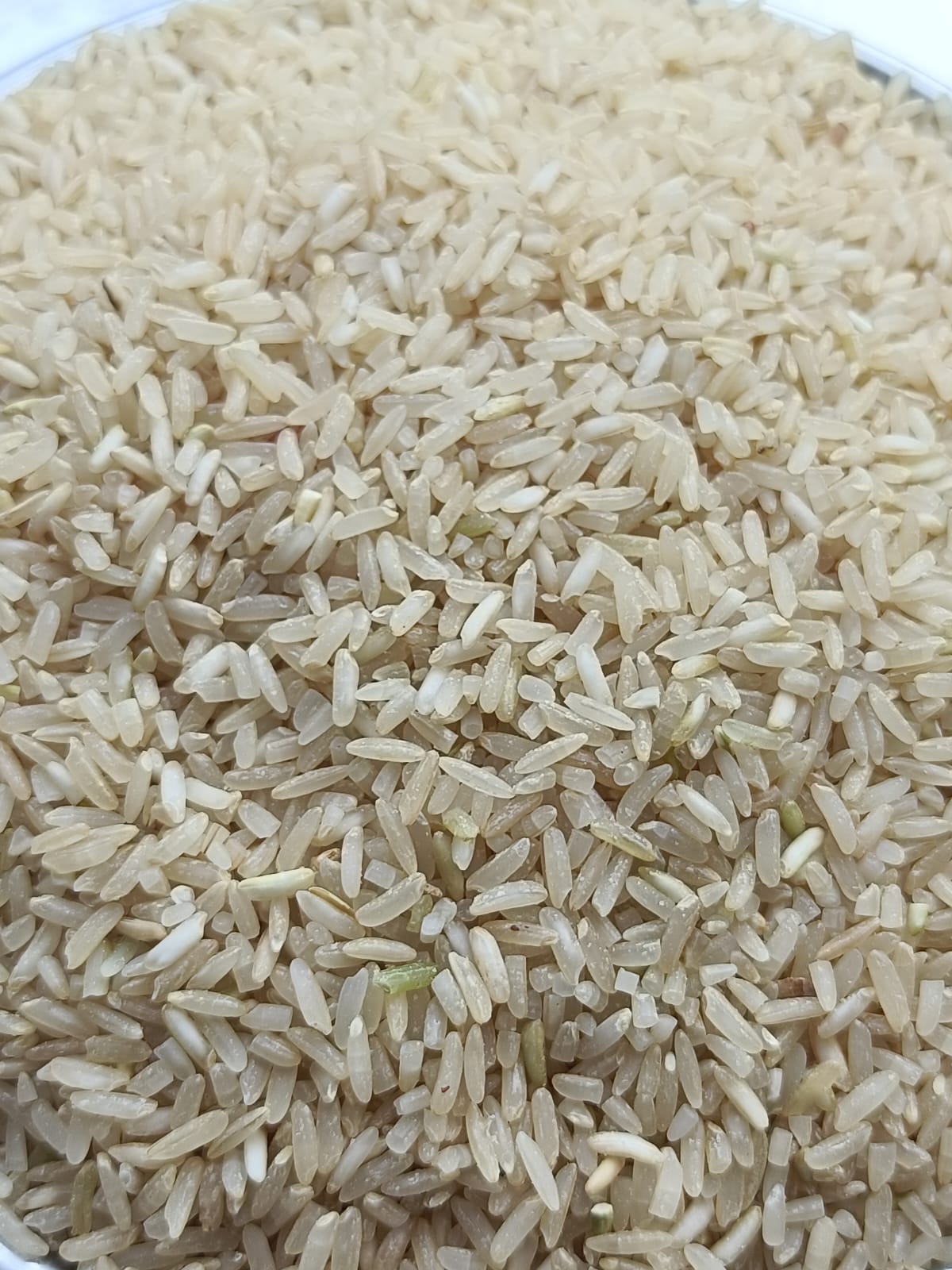
Hand Pounded Indrayani Rice 5kg (Organic Hathsadi)
Choose options
Indrayani rice pounded by hand, hathsadi tandul as it was made before rubber roller mills arrived in every taluka. The husk comes off, the bran layer largely stays, and the grain looks dull cream rather than glassy white.
Pounding against polishing
A polishing machine shaves the grain again and again to make it shine and to make it sit longer in a warehouse. Pounding is gentler and much slower, and it leaves a few broken grains in every bag. Those broken grains are the honest mark of the process.
Cooking and eating
Indrayani is soft, faintly sticky and aromatic. Unpolished grain drinks more water and takes longer, so soak it for 30 to 40 minutes and allow about two and a half cups of water per cup of rice in an open vessel. This is the rice for varan bhaat with ghee, masale bhaat, dahi bhaat, and a plain plate next to amti. Skip it for biryani, the grain is far too soft to stay separate.
Bag size and storage
Sold as a single 5kg bag. Bran carries oil, so hand pounded rice will not sit quietly for a year the way polished rice does. Keep it in an airtight drum and finish it within four to five months.
Other varieties are listed under rice. Try ambemohor when you want scent on the table, and keep jaggery powder handy if gul poli follows the meal.
Frequently asked questions
Is unpolished rice better than polished rice
They are different, not ranked. Unpolished grain keeps its bran, so there is more fibre and more flavour, but it cooks slower and does not store as long. Polished rice is quicker and softer and lasts.
Why does hand pounded rice have broken grains
A pestle cannot work as evenly as a steel mill, so some grains split. It changes nothing about how the rice cooks or tastes.
How much water does Indrayani rice need
Around two and a half cups to one cup of soaked rice in an open pot.


