
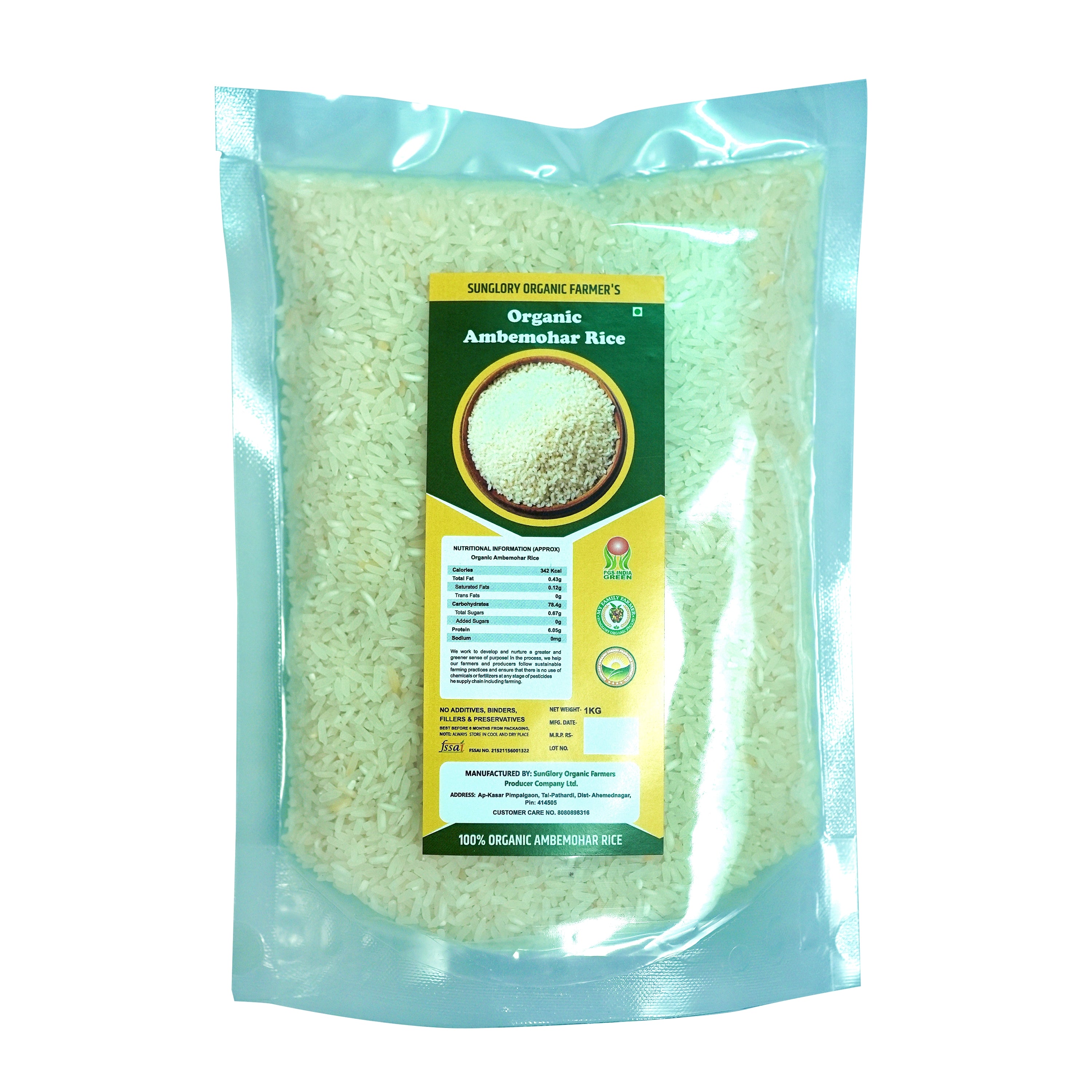
Ambemohor Rice (Tandul)
Weight
Choose options
Weight
Weight
Ambemohor rice gets its name from the smell of mango blossom, and you notice it the moment the lid comes off the pot. This is the short grain Pune favourite, spelled ambemohar rice in some places and called ambemohor tandul at home. The grain is small, soft and a little sticky once cooked.
Ours grows at Kasarpimpalgaon in Ahmednagar district, on soil fed with vermicompost rather than chemical fertilizers. It reaches you without going through a wholesale market, so nobody in between has a reason to blend in cheaper grain.
How it cooks
It drinks less water than a long grain rice. Start with roughly one and a half cups of water to a cup of rice and check at twelve minutes. Cooked right it holds a soft shape and takes ghee beautifully, which is why varan bhaat with a spoon of desi ghee and a squeeze of lemon is the standard test of good ambemohor. It also suits masale bhaat, dahi bhaat and kheer.
Pack sizes and storage
Available in 1kg, 2kg and 3kg. New season grain carries more scent, so buy what you will finish in two or three months and keep it in a steel dabba away from the gas stove.
If you want a chewier unpolished grain, look at the hand pounded ambemohor, or go through the rest of our rice.
Frequently asked questions
Why does my ambemohor rice not smell like it used to
Aroma fades with age and with heavy polishing. We mill in small lots right through the season, so what reaches you still carries scent.
Is ambemohor the same as ambemohar
Yes, only the spelling changes. Both names point to the same short grain Maharashtrian variety named after the mango blossom smell.
Can I use ambemohor rice for biryani
You can, though it is not the natural fit. The grains are short and soften fast, so biryani ends up clumped instead of separate.


