
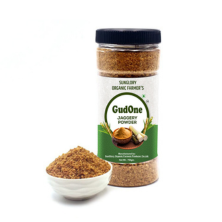
Organic Jaggery Powder (Gul / Gur)
Weight
Choose options
Weight
Weight
Jaggery powder made at our own gul plant on the farm. Cane is cut, crushed and boiled the same day, stirred down in an open pan, then dried and crumbled. No sulphur, no hydros and no chemical whiteners, which is why the colour lands somewhere between amber and dark brown instead of that pale yellow you see stacked in the market.
Made where the cane grows
Running the plant ourselves settles the one thing that decides quality, what goes into the pan. Cane juice, a little deola for clarifying, and heat.
Using gul at home
Powder dissolves quicker than a dhep, which makes it the easier form for daily cooking. It goes into amti and varan for that sweet Maharashtrian edge, into puran poli, gul poli, chikki, sheera and ladoo, and into tea once the flame is off. Start with a little less than the sugar a recipe calls for, then taste.
Packs and storage
Available in 500g and 1kg. Real gul pulls moisture out of the air and will clump through monsoon. An airtight jar handles that.
The whole jaggery range includes solid gul dhep for people who prefer to shave it themselves, and jowar flour goes with it if gul poli is on your list.
Frequently asked questions
Is jaggery better than sugar
It is less processed and it carries the minerals of the cane along with its taste. It remains a sweetener though, and it should be used like one, for flavour rather than as a licence to add more.
Why is your jaggery dark instead of golden yellow
Bright yellow jaggery has usually been lightened with chemicals. Ours is only boiled and dried, so it stays amber to dark brown and the shade moves with each batch of cane.
My jaggery powder has gone sticky, has it spoiled
No. Gul absorbs humidity, and a Pune monsoon gives it plenty. Keep the jar sealed and dry and carry on using it.


