
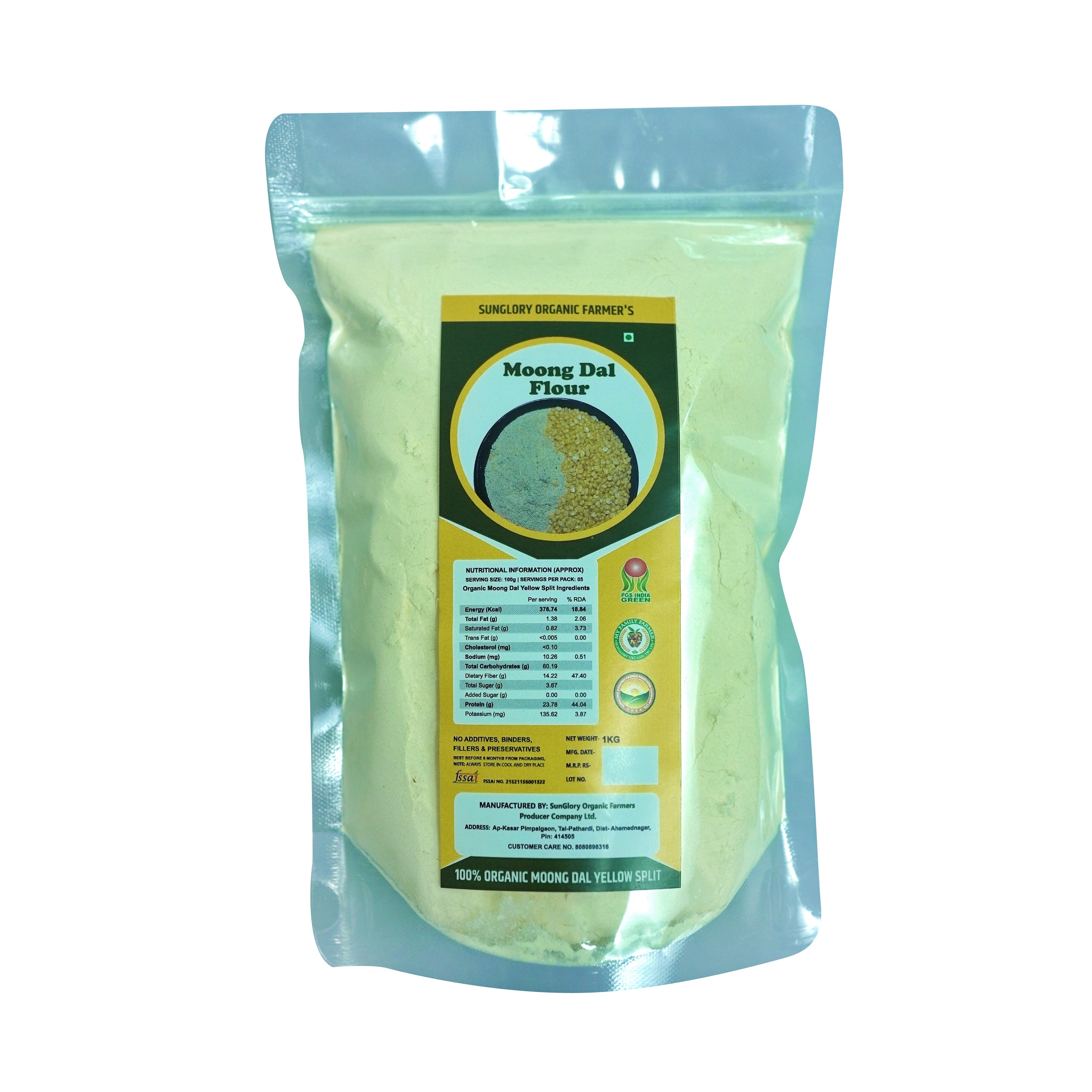
Moong Dal Flour (Moong Peeth)
Weight
Choose options
Weight
Weight
Moong dal flour, moong peeth on a Marathi shopping list, milled from split green gram grown by our farmer group. It is finer and paler than besan, with a mild, faintly sweet taste that never takes over whatever you mix it into.
We grind this one in small lots as orders come in rather than storing sacks of ready flour. Pulse flours pick up a stale smell fast, and once that happens no amount of tempering hides it. The dal itself is grown on our members' fields with vermicompost from our own plant.
What to cook with it
Moong peeth makes a lighter pithla than chana flour does, and it goes into modak fillings, khandvi style rolls and the batter for mangode. It saves an hour in moong dal halwa, standing in for dal that would otherwise need soaking and grinding. Mixed with curd and a pinch of turmeric it is also the ubtan that most Indian grandmothers swear by.
Pack sizes and keeping it
1kg, 2kg, 3kg and 4kg. An airtight jar is enough for most of the year, and the fridge is safer through the monsoon.
See the rest of the flours we mill, or pick up rice flour if you make ghavan and modak.
Frequently asked questions
Is moong dal flour the same as besan
No. Besan is milled from chana dal and tastes stronger and earthier. Moong dal flour is paler, finer and much milder, so the two cannot be swapped in a recipe where the flour carries the flavour.
Does moong dal flour have gluten
None, since it is milled from a pulse. It will not bind the way wheat flour does either, so recipes using it lean on curd or a starch.
How do I stop moong dal flour from turning lumpy
Whisk it into cold water first until the paste is smooth, then pour that into the hot pan. Tipping dry flour straight into hot liquid is what creates the lumps.


