
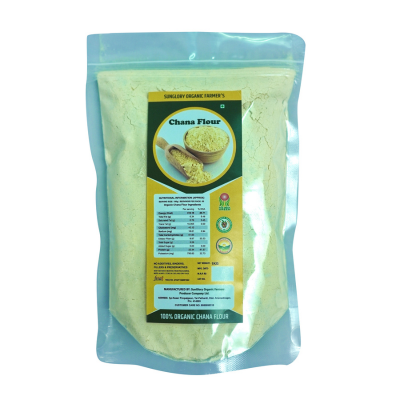
Chana Flour (Besan / Chana Peeth)
Weight
Choose options
Weight
Weight
Besan ground from whole desi chana grown by our own farmer members at Kasarpimpalgaon. This chana flour goes through the mill in small lots, so what reaches your kitchen was a whole gram a few days ago not a sack sitting in a warehouse since last season.
Why our chana peeth behaves differently
Freshly milled besan smells nutty the moment you open the bag. Older stock smells flat, slightly bitter, and it drinks water unevenly when you whisk it. The gram behind this one is raised on vermicompost from our own plant, with no chemical fertilizer on the crop and no middleman between the field and the mill.
In the kitchen
Pithla comes together in about six minutes with this flour and stays smooth instead of lumping. Zunka wants a drier hand, roughly half the water. It also holds up in kadhi, thalipeeth mixes, bhaji batter on a wet evening, and the besan ladoo made a week before Diwali.
Pack sizes
Available in 1kg, 1.5kg, 2kg and 4kg. The 4kg suits households that fry often or run a small tiffin service.
Storage
Keep it in a steel dabba with a tight lid. Besan pulls in moisture faster than wheat flour and clumps through the Pune monsoon.
Cooks who buy this usually add desi jowar flour for bhakri, or a bottle of wood pressed groundnut oil for the frying. The rest of the milling sits under grains and flours.
Frequently asked questions
Is besan the same as chana flour
Yes. Besan is the Hindi word and chana peeth the Marathi one, both meaning flour milled from gram. Cheaper packets often carry yellow pea mixed in, ours is only chana.
How long does fresh besan stay good
Around two months sealed at room temperature, longer if you keep the dabba in the fridge. The smell goes off before the taste does, so trust your nose.
Why does my pithla turn lumpy
Almost always because the flour went into hot water. Mix the besan into room temperature water first, then pour that mixture into the fodni.


