
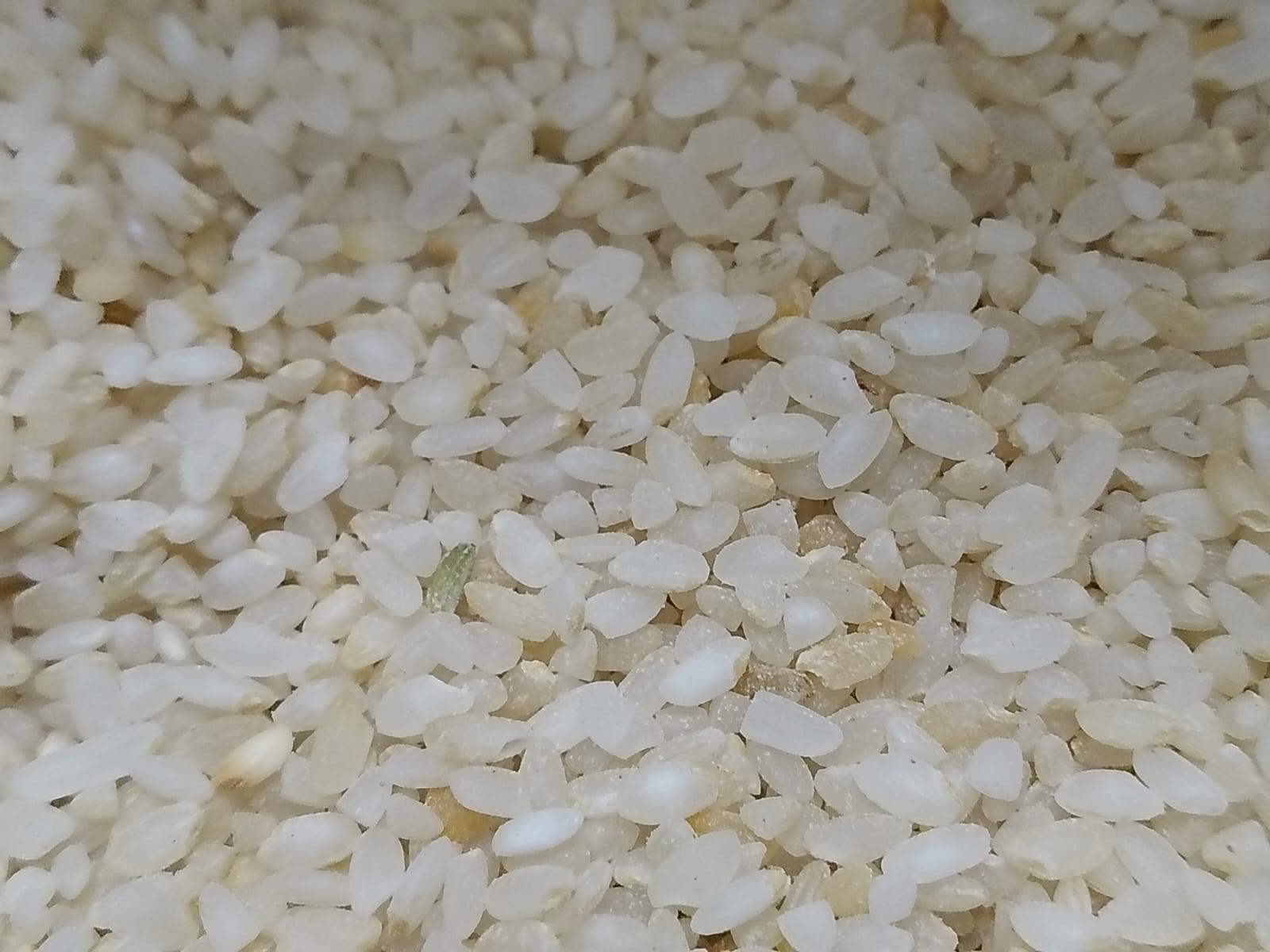
Organic Unpolished Ambemohor Rice (1kg)
Choose options
Ambemohor rice, unpolished, in a 1kg pack. The name points at the smell of mango blossom that lifts off the pot as it cooks, and this short grained variety was on Pune tables long before basmati became the default in every kitchen.
Left unpolished on purpose
Only the husk is taken off. The bran stays, so the grain reads cream with faint reddish flecks, and the fragrance survives because most of it lives in that outer layer. Polishing buys shine and shelf life and takes the scent along with it. Grown by our farmer members on vermicompost, with no chemical fertilizer, and packed after milling instead of months later.
Getting it right on the stove
Ambemohor is delicate and it cooks fast for an unpolished rice. Rinse twice, soak twenty minutes, then use roughly two cups of water to one cup of rice in an open pot so the grains stay loose. It shines plain, with varan and a spoon of ghee, or as the bhaat beside amti and koshimbir. Dahi bhaat and a light masale bhaat both work.
Pack size and storage
A single 1kg pack, a sensible quantity for trying the variety before you commit to a larger bag. An airtight jar and a few months is the right approach, since the bran carries oil that eventually turns.
The other varieties are in the rice collection, among them Indrayani and jeera kolam for everyday meals.
Frequently asked questions
What does ambemohor rice smell like
Like mango blossom, which is where the name came from. The scent is sharpest as the lid comes off, and it fades once rice has been polished or left open in a jar.
Is ambemohor rice the same as basmati
No. Basmati grains are long and stay firm and separate. Ambemohor is short, soft and a little sticky, built for varan and amti rather than pulao.
Why is this rice slightly darker than what I buy usually
The bran is still on the grain. Milling it away would leave the rice whiter, glossier and much less fragrant.


