
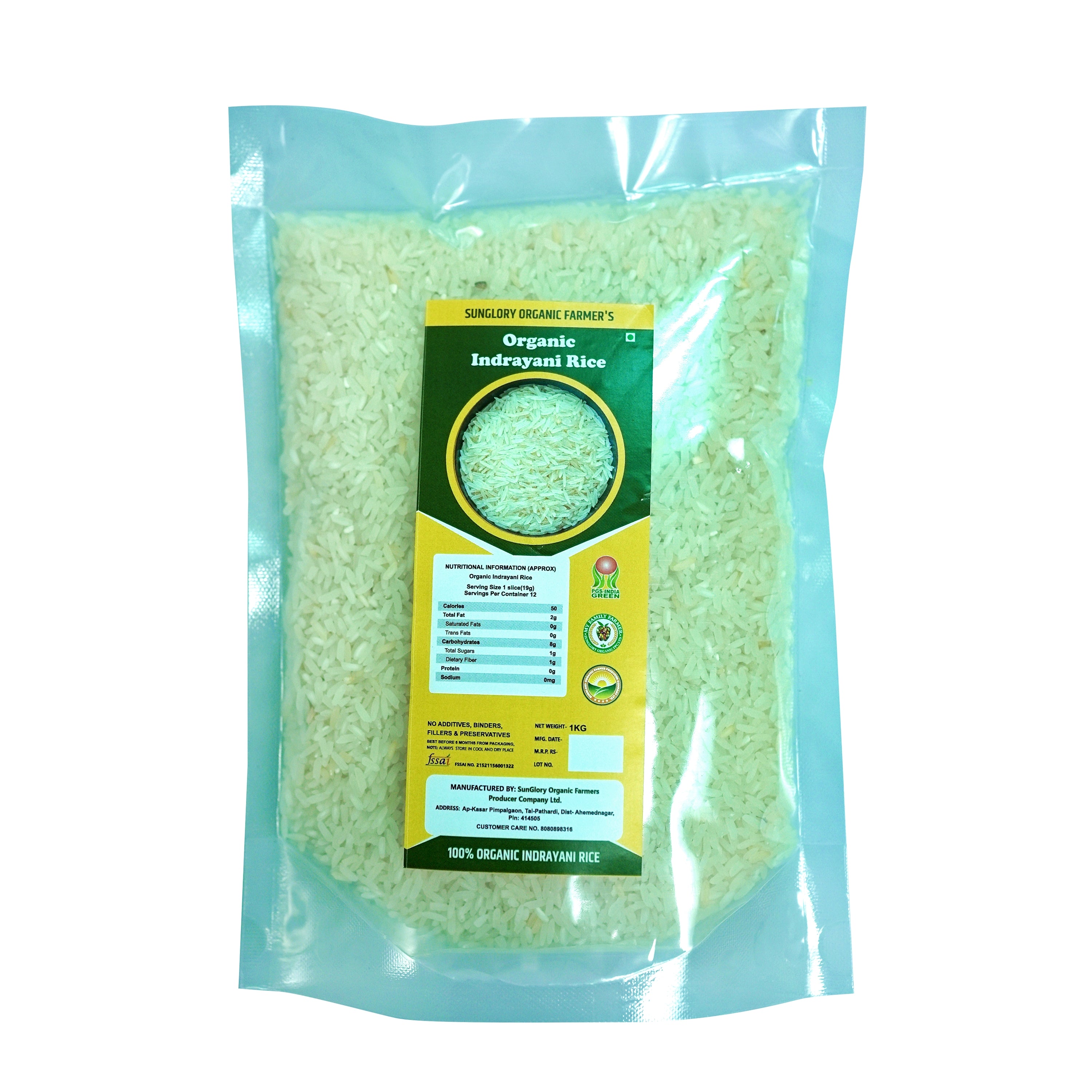
Indrayani Rice
Weight
Choose options
Weight
Weight
Indrayani rice from our own farmer group, the everyday rice of Pune plates. Soft, faintly sweet, and the smell arrives the moment the cooker whistles.
Where it comes from
Grown on vermicompost from our plant, harvested, dried and milled for us, then packed. Nothing passes through a wholesale market, so no sack sits in a godown for a year picking up the smell of jute.
Cooking and eating
Rinse twice, then one and a quarter parts water in the cooker, three whistles, flame off. The grain swells short and stays a touch sticky, which suits varan bhaat, masale bhaat, dahi bhaat and a Sunday rassa poured over it. For a biryani where every grain must stand apart, this is the wrong rice and a long grain will serve you better.
Packs
Available in 1kg, 2kg, 3kg, 4kg, 5kg and 10kg. Ten kilos suits a household eating rice twice a day and the small packs are there to taste it first. New season rice cooks softer than aged stock, so trim the water for the first few pots until you learn the packet.
Cook it alongside toor dal for varan, switch to jeera kolam when you want a finer grain, and see the rest of our rice collection.
Frequently asked questions
Is Indrayani rice sticky
Slightly, yes, and that is simply the variety. Rinse it well and hold back a little water and it will not clump. Nobody in Maharashtra buys Indrayani hoping for loose grains.
How much water for Indrayani rice in a cooker
One and a quarter cups of water to one cup of rice, three whistles, is the standard setting here. Older stock takes a spoon more. Fresh rice takes less.
What is the difference between Indrayani and Kolam rice
Indrayani is shorter, softer and more aromatic. Kolam is slimmer, drier and cooks up separate, which is why hotels lean on it. Homes that eat rice with dal usually prefer Indrayani.


