
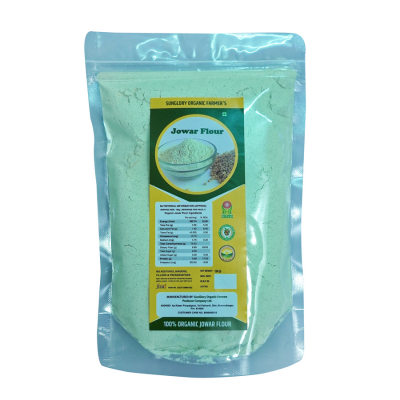
Desi Jowar Flour (Jwari Peeth)
Weight
Choose options
Weight
Weight
Jowar atta ground from desi white sorghum that our farmer members grow, sold across Maharashtra as jwari peeth. Jowar flour has no gluten, so it behaves nothing like wheat. The dough will not stretch, it has to be patted out by hand.
We mill in small lots and send the flour out within days, which matters more with jowar than with wheat because the flour carries fat and turns bitter on a shop shelf. The grain comes off our forty acre farm at Kasarpimpalgaon, raised on vermicompost.
Making bhakri that does not crack
Use very hot water, knead for longer than feels necessary, and pat the bhakri out on a wet cloth with a flat palm. Cook one side dry, flip it, then wet the top with your hand before turning it once more. Done properly it puffs. Serve with thecha, pithla, zunka or vangyache bharit. The same flour goes into thalipeeth along with a handful of bajra flour.
Pack sizes
1kg, 2kg, 3kg, 4kg and 5kg. Store it airtight in steel and finish it inside a month, or refrigerate it through Pune's humid weeks. Fresh flour smells faintly sweet, old flour smells sour.
The rest of what we mill sits under grains and flours, and rice flour is worth keeping beside it.
Frequently asked questions
Is bhakri healthier than chapati
They are different, not one better than the other. Bhakri comes from jowar or bajra and has no gluten, chapati is wheat and does. What suits you depends on what you eat it with.
Why does my jowar bhakri break while patting
Nearly always the water was not hot enough, or the dough dried out uncovered. Knead with boiling water, keep the ball under a damp cloth, and pat with a wet palm.
How long does jowar flour stay fresh
Around a month at room temperature in Pune, and longer refrigerated. It is milled fresh in small lots, so that clock starts when the packet reaches you.


