
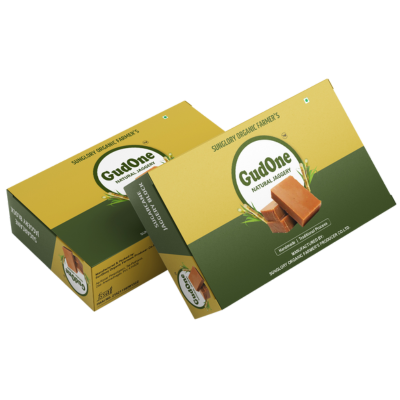
Organic Jaggery Blocks (Gul / Gur) - Pack of 2
Weight
Choose options
Weight
Weight
Two solid jaggery blocks, one kilogram together, made at the jaggery plant we run on the farm. Gul in Marathi, gud or gur elsewhere, boiled down from cane cut in our own fields.
How it is made
Cane reaches the crusher the same day it is cut. The juice boils in open pans and is skimmed by hand, then poured into moulds and left to set. No sulphur, no chemical whiteners. That is why these blocks come out brown going on dark, and why they smell of cane rather than of nothing at all.
What people do with it
A block shaves easily with a knife and grates without crumbling everywhere. It goes into gul poli, into chikki with roasted groundnut, into laddoo and sheera, and a small piece dropped into amti rounds off the tamarind.
Packs and keeping
This listing is a pack of two blocks totalling one kilogram. Wrap whatever you open in cloth or shut it in a jar, because jaggery pulls moisture out of the air and goes sticky through a Pune monsoon. A dry dark shelf is enough and no fridge is needed.
If you would rather have it loose, take the jaggery powder, and the round jaggery dhep is the older shape. It all sits together in the jaggery collection.
Frequently asked questions
Why is your jaggery dark and not golden yellow
Bright yellow jaggery usually takes that colour from clarifiers added while boiling. Ours is skimmed by hand, so the shade depends on the cane and on the batch. Dark simply means untreated.
Is jaggery better than sugar
It is still a sugar and worth treating as one. What it keeps is the molasses that refining removes, and that is where the colour, the minerals and the taste come from. Cooks use it because it tastes of something.
Why has my jaggery gone soft and sticky
It has drawn moisture from the air, which untreated jaggery does readily. Keep it sealed. The gul is perfectly usable, only messier to cut.


