
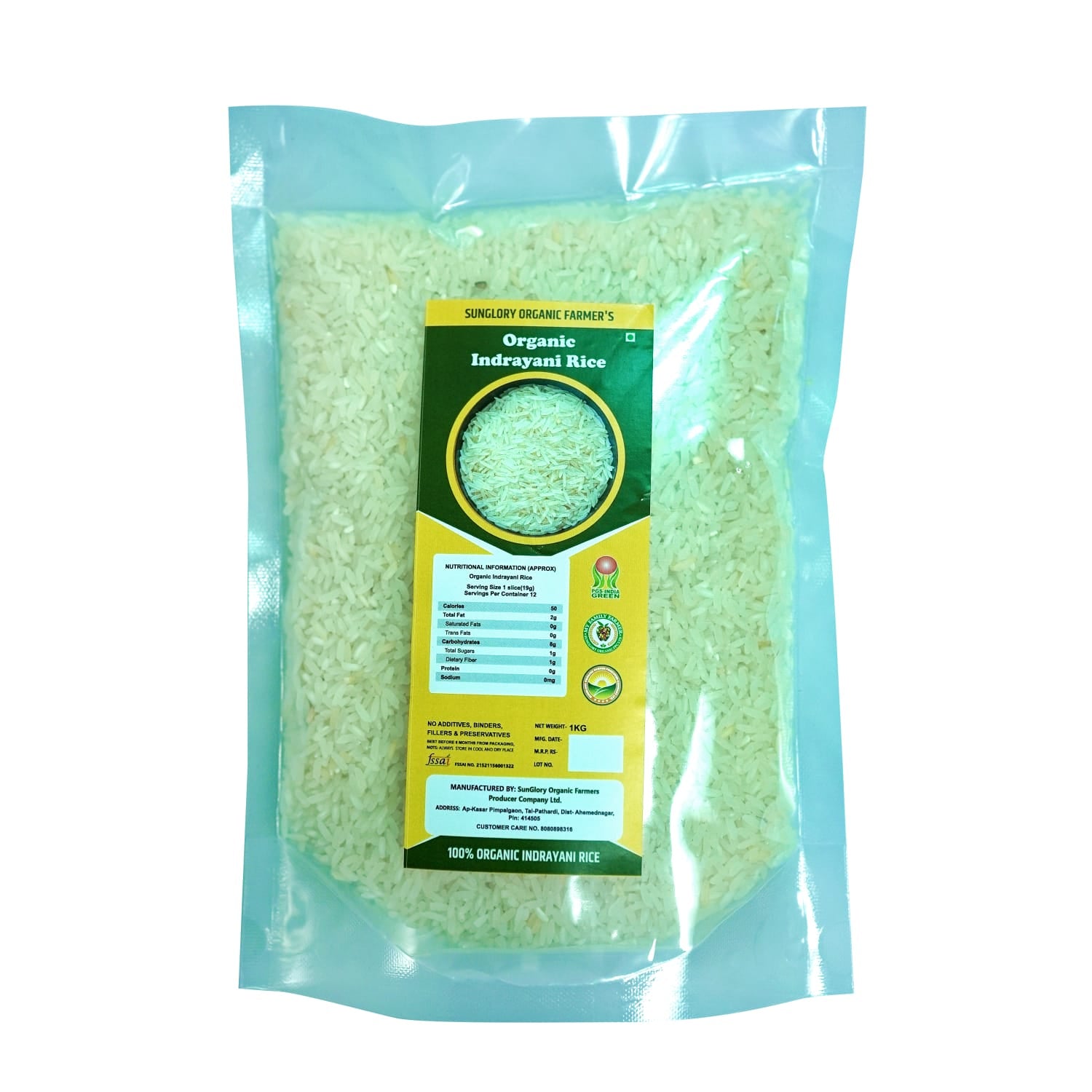
Hand Pounded Indrayani Rice 1kg (Organic Hathsadi)
Choose options
Indrayani rice pounded by hand instead of being run through a polishing machine. Hathsadi is the old Marathi word for the method. It leaves most of the bran on the grain, which is why this rice looks dull grey brown rather than chalk white.
Why hand pounding changes the grain
A modern huller passes paddy through abrasive rollers, shaving bran off until every grain looks identical. Pounding knocks the husk away and stops there. You get broken grains in the bag, uneven colour, and rice that cooks slower and smells far stronger when the lid comes off. That is unpolished rice in the real sense.
Cooking it
Soak twenty minutes, use one part rice to two and a half parts water, and allow a few minutes more than polished rice needs. Indrayani turns soft and faintly sweet, which is why it belongs with varan bhaat and a spoon of ghee, with dahi bhaat in summer, and in khichdi. For biryani it is the wrong choice.
Pack
One kilogram, grown by our farmer members and pounded in small lots.
Storage
The bran and its oil are still on the grain, so this will not sit for a year the way milled white rice does. Finish it within a few months and tuck a couple of dried neem leaves into the container.
For a lighter everyday grain our jeera kolam rice cooks fluffier, and for something fragrant there is hand pounded ambemohor. Every variety we grow is under organic rice.
Frequently asked questions
Is unpolished rice better than polished rice
Unpolished keeps the bran, so it has more fibre and a much stronger taste. Polished cooks quicker and stores longer. Choose by how your kitchen cooks, not by the label.
Why are there broken grains in hand pounded rice
A wooden pestle breaks a share of the grains, and sorting them out would only raise the price. Broken grains cook and taste the same.
Does Indrayani rice need more water
Yes. With the bran still on, plan for half a cup more water per cup of rice.


