
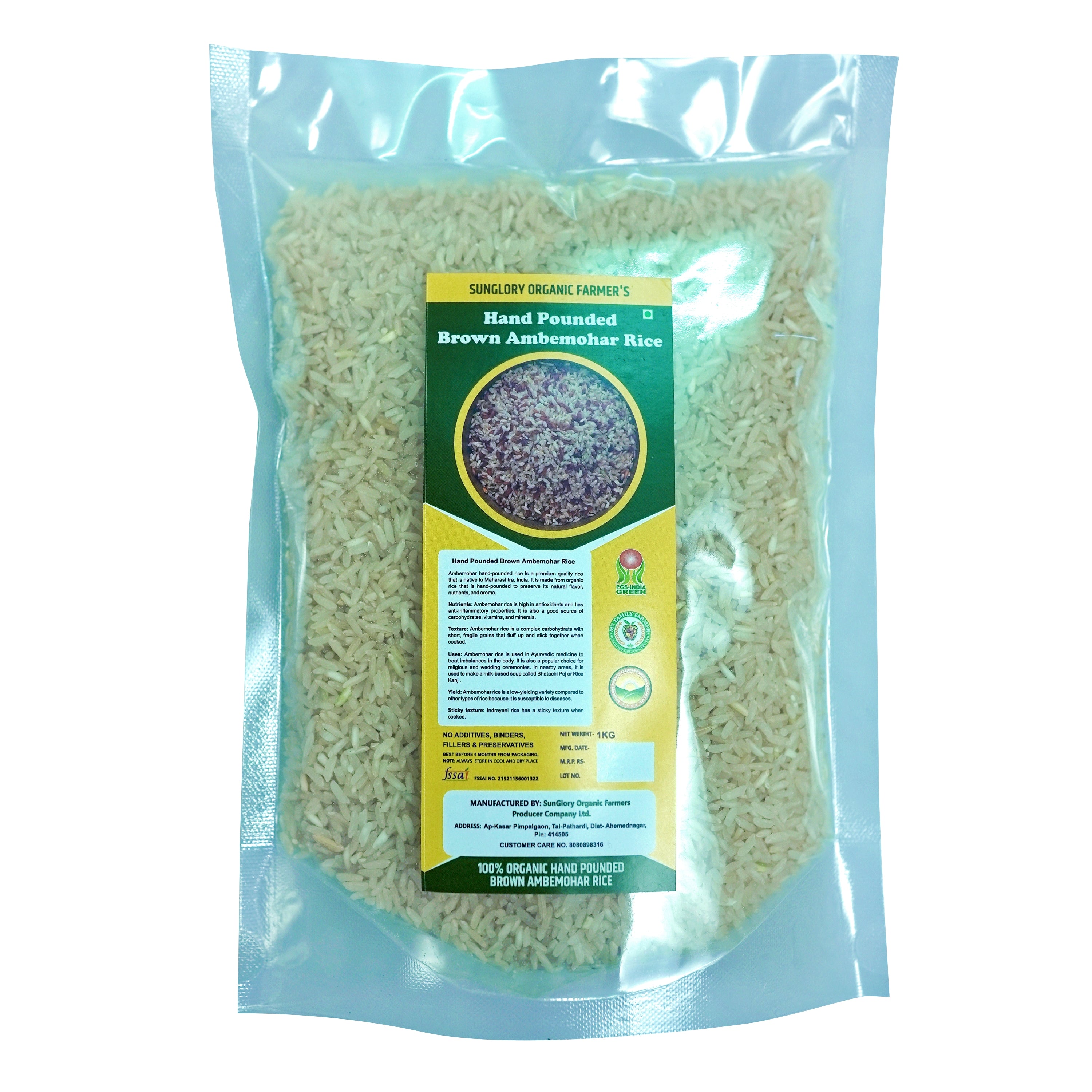
Hand Pounded Ambemohor Rice
Weight
Choose options
Weight
Weight
Ambemohor rice is the short grain from the Mawal belt that smells of mango blossom the moment it starts to boil. Ours is hand pounded, so the bran is knocked off gently instead of being buffed away by a bank of polishing machines, and the grain keeps a faint pink cast.
Pounding by hand is slow and it cracks a few grains, so you will find some kani in the bag. That is what honest unpolished rice looks like when nobody has run it through five polishers to make every grain white and identical.
Cooking it
Ambemohor takes less water than long grain rice and softens quickly, so keep the ratio near one to two and pull it off the heat early. It cooks soft and slightly clingy, which is exactly right under varan and toop, or beside amti with a wedge of lemon. Older Pune households also use it for dahi bhaat and for the plain rice at a wedding meal.
Sizes and keeping it
Packed as 1kg, 2kg, 3kg, 4kg and 5kg. Bran oil is still on the grain, so use an airtight steel dabba and buy for three months rather than for the year.
Try our jeera kolam rice when you want something firmer midweek. Everything we mill is on the rice page, and a spoon of desi ghee over hot ambemohor is the whole point.
Frequently asked questions
Why does ambemohor rice smell like mango
The variety carries an aroma compound that reads as mango blossom, and the name comes from exactly that. The smell is strongest in a fresh crop and fades as the rice ages.
Is hand pounded rice better than machine polished rice
They are different rather than ranked. Hand pounding leaves part of the bran on, so the rice tastes nuttier and looks less white. Machine polished rice cooks faster and sits on a shelf longer.
How much water should I use for ambemohor rice
Two cups of water to one cup of rice in an open pot, less in a cooker. Soak twenty minutes first and it wants even less.


