
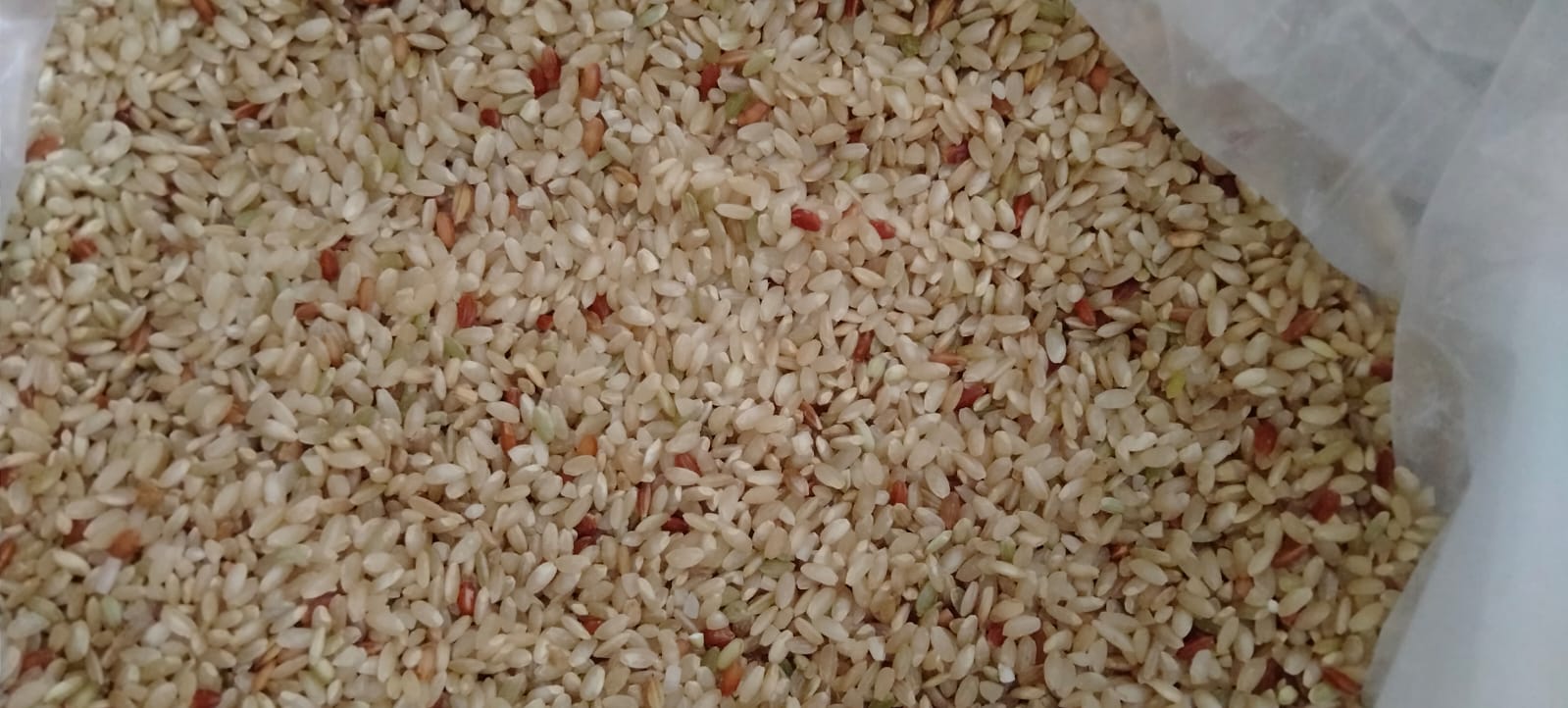
Hand Pounded Ambemohor Rice 1kg (Organic Hathsadi)
Choose options
Ambemohor rice pounded by hand, the way hathsadi tandul was made before roller mills arrived. The name comes from the smell of mango blossom that lifts off the pot while it cooks.
What hand pounding does
A wooden pestle loosens the husk without shaving away the bran, so the grain stays dull cream with brown flecks left on it. Machine polishing takes that layer off to make rice shine. Ours has short grains and some breakage, which is what pounding gives you.
How it cooks
Soak twenty minutes. Either cook it open in plenty of water and drain, or use a cooker with one and a half parts water for two whistles. Grains stay soft and cling slightly, right for varan bhaat with ghee, for dahi bhaat, for a plain khichdi. It thickens kheer on its own because of the starch it still holds.
Comes as a one kilogram pack. Store it in a steel container with a few cloves and keep it dry, because unpolished grain draws weevils faster than polished rice does. Grown by our farmer members on vermicompost, milled to order, nothing bought from a wholesale market.
Compare it against regular Ambemohor rice, put a spoon of A2 desi ghee over it, or look through the whole rice range.
Frequently asked questions
What does hand pounded rice mean
Paddy is dehusked with a pestle and mortar rather than a polishing machine. Most of the bran survives that process. The grain looks duller, breaks more easily and tastes nuttier than mill polished rice.
Why is my Ambemohor rice sticky
Ambemohor is a soft short grain variety and a little stickiness is its character. It was never meant to be a pulao rice. Cut the water slightly or drain it if you want looser grains.
Is unpolished rice better than polished rice
They are different, not one above the other. Unpolished keeps its bran, so there is more fibre, a stronger taste and a longer cooking time. Polished is softer and quicker. Choose by the dish in front of you.


