
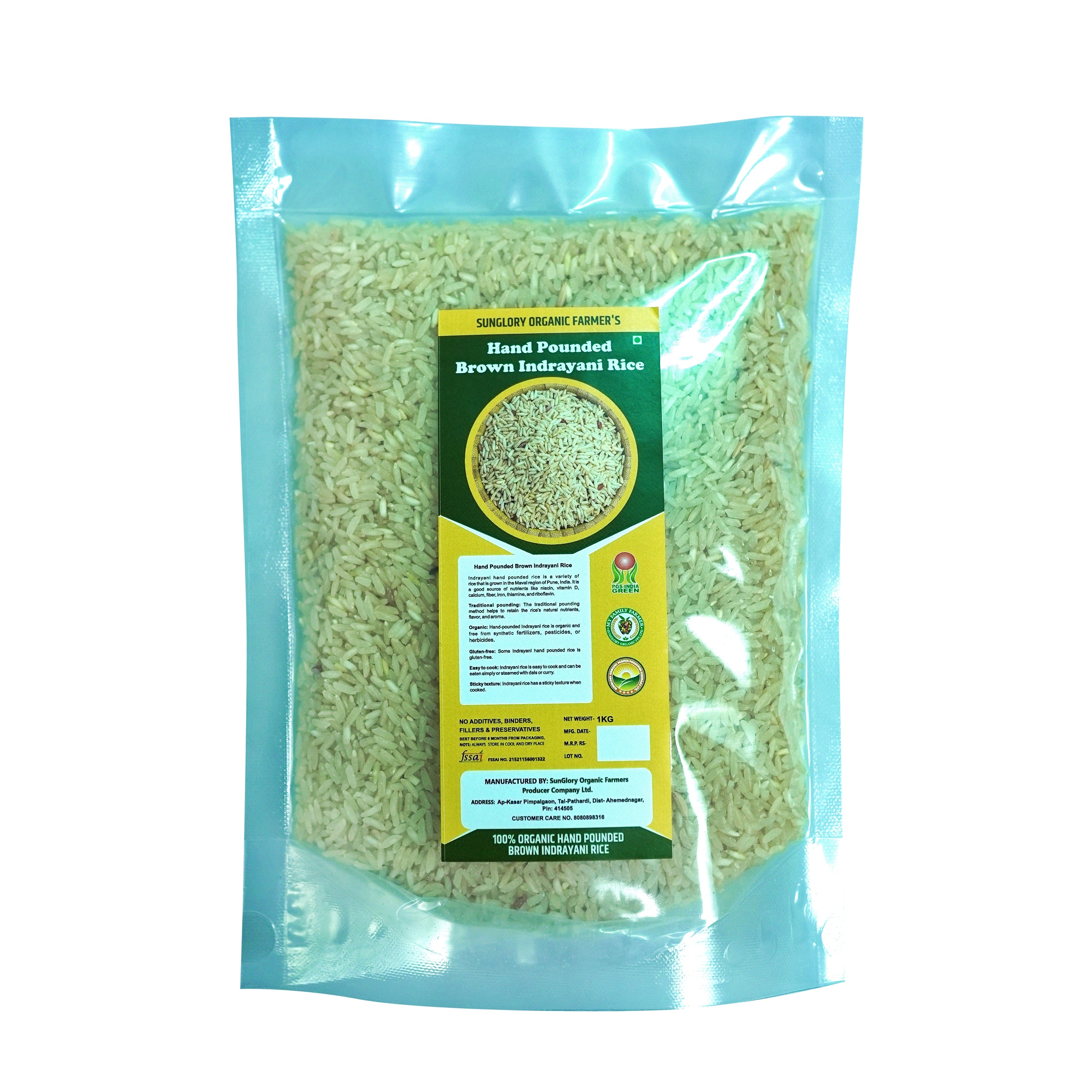
Hand Pounded Brown Indrayani Rice
Weight
Choose options
Weight
Weight
Brown rice that keeps its bran because it is hand pounded instead of being run through a polishing machine. The variety is Indrayani, the soft aromatic paddy from the belt around Pune, and leaving the bran on turns the grain from white to a light reddish brown.
Hand pounding is slow work and the yield drops, which is why most of the trade skips it. Our farmer members grow the paddy on vermicompost fed soil, we pound it in small lots, and nothing goes through a mandi.
Cooking notes
Soak for at least forty minutes, longer if your morning allows. Then cook with two and a half cups of water per cup of rice, or three whistles in a cooker. It has a nutty chew and stands up to amti, usal and a thick varan without going soft. Khichdi made with it wants one extra whistle. A spoon of A2 desi ghee over the top suits the flavour.
Pack sizes and storage
1kg through 5kg, plus a 10kg bag for households that eat it daily. The bran oil is still there, so it does not keep as long as white rice. Keep it airtight in a cool corner and finish it within three months.
For the polished version try Indrayani rice, or see everything under rice.
Frequently asked questions
Is unpolished rice better than polished rice
It is different rather than better. Unpolished grain keeps the bran layer, so there is more fibre and a firmer bite, while polished cooks softer and faster.
What does hand pounded mean
The paddy is dehusked by pounding rather than by a modern polisher. That takes the husk off while leaving most of the bran, so the grain stays brown and a few grains break along the way.
Why is my brown rice still hard after cooking
It needs a longer soak and more water than white rice. Forty minutes of soaking, and a little extra water in the pot, sorts it out in most kitchens.


