
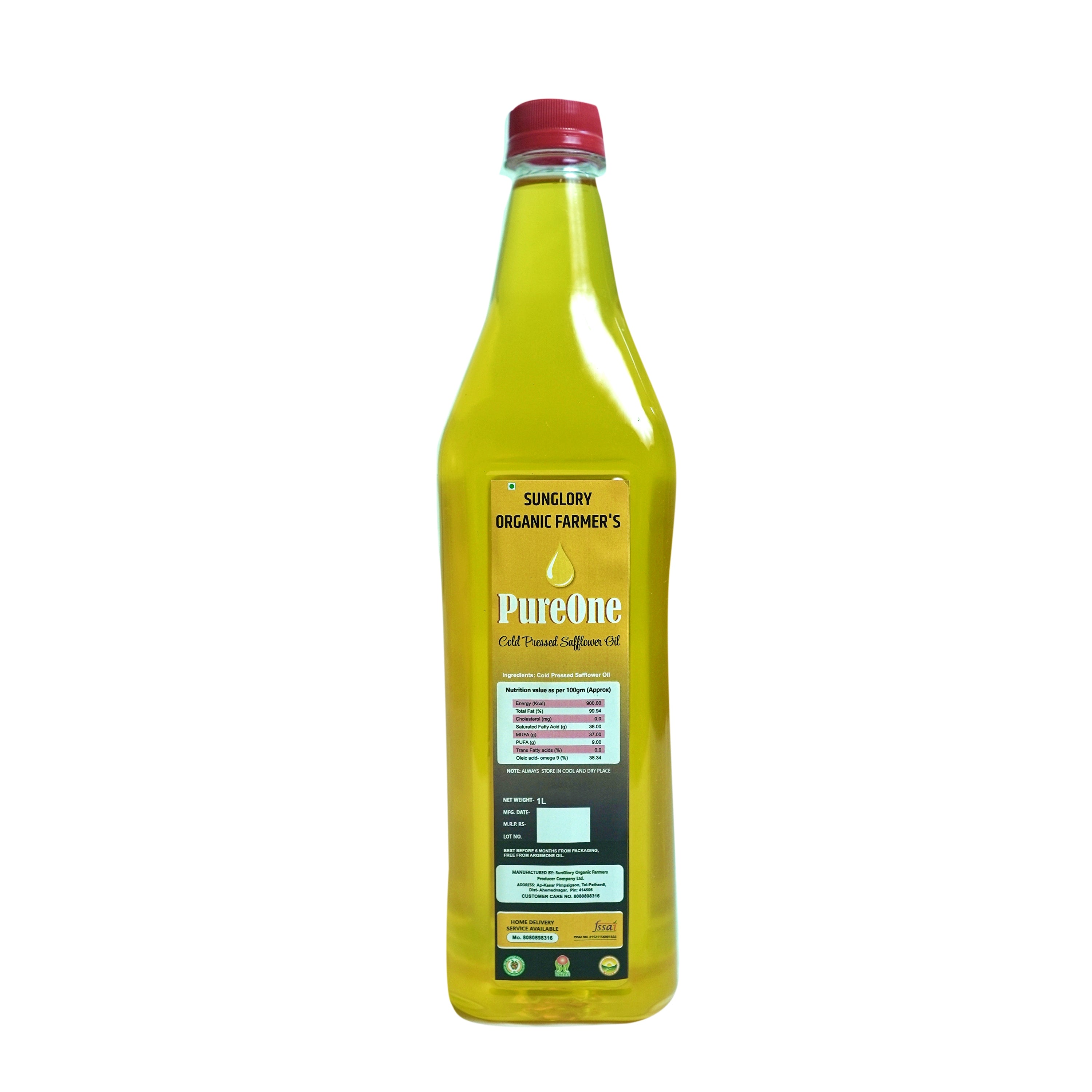
Safflower Oil 1-4 Litre (Karadi Tel) - Cold Pressed
size
Choose options
size
size
Safflower oil, karadi tel, pressed cold from kardi seed grown within our own group. Marathwada and western Maharashtra cooked on this oil for generations, then it slipped off the shelf when refined pouches arrived. It is back, made slowly.
Pressed, settled, cloth filtered
Kardi seed is cleaned and goes into the ghani without any heating. The raw oil then sits for a few days to settle and is filtered through cloth, and that is the entire process. Colour comes out pale straw. The taste is mild with a faint seed note, lighter than groundnut and far less assertive than mustard. No solvent, no bleaching earth, no deodorising column anywhere in the line.
Everyday cooking
Older Marathi households reach for karadi tel during upvas, and it makes a sensible daily oil for bhaji, amti, varan fodni and pithla. Sabudana vada fries in it without the oil taking over the taste. It also suits thecha and pickles, where a heavy oil tends to bully everything else in the jar.
Bottles and storage
Filled in 1 litre, 2 litre, 3 litre and 4 litre. Store it out of sunlight, cap it properly, and keep water out of the neck of the bottle. Cloudiness at the base is settled seed matter and nothing worse.
Everything we press is listed under wood pressed oils. For a sharper tadka there is mustard oil, and Diwali sweets traditionally call for sesame oil.
Frequently asked questions
Is safflower oil the same as kardi oil
Yes. Kardi, or karadi in Marathi, is the local name for safflower. Same seed, same oil, two names.
What is the difference between cold pressed and refined oil
A cold press crushes and filters, nothing more, so colour and seed smell stay in. Refining uses heat and chemicals, then bleaches and deodorises until nothing is left to taste. Refined oil keeps longer and costs less to produce.
How should I store this oil
A cool dark cupboard, a tight cap, and a clean dry pourer. Light and warmth are what age it, not the calendar.


