
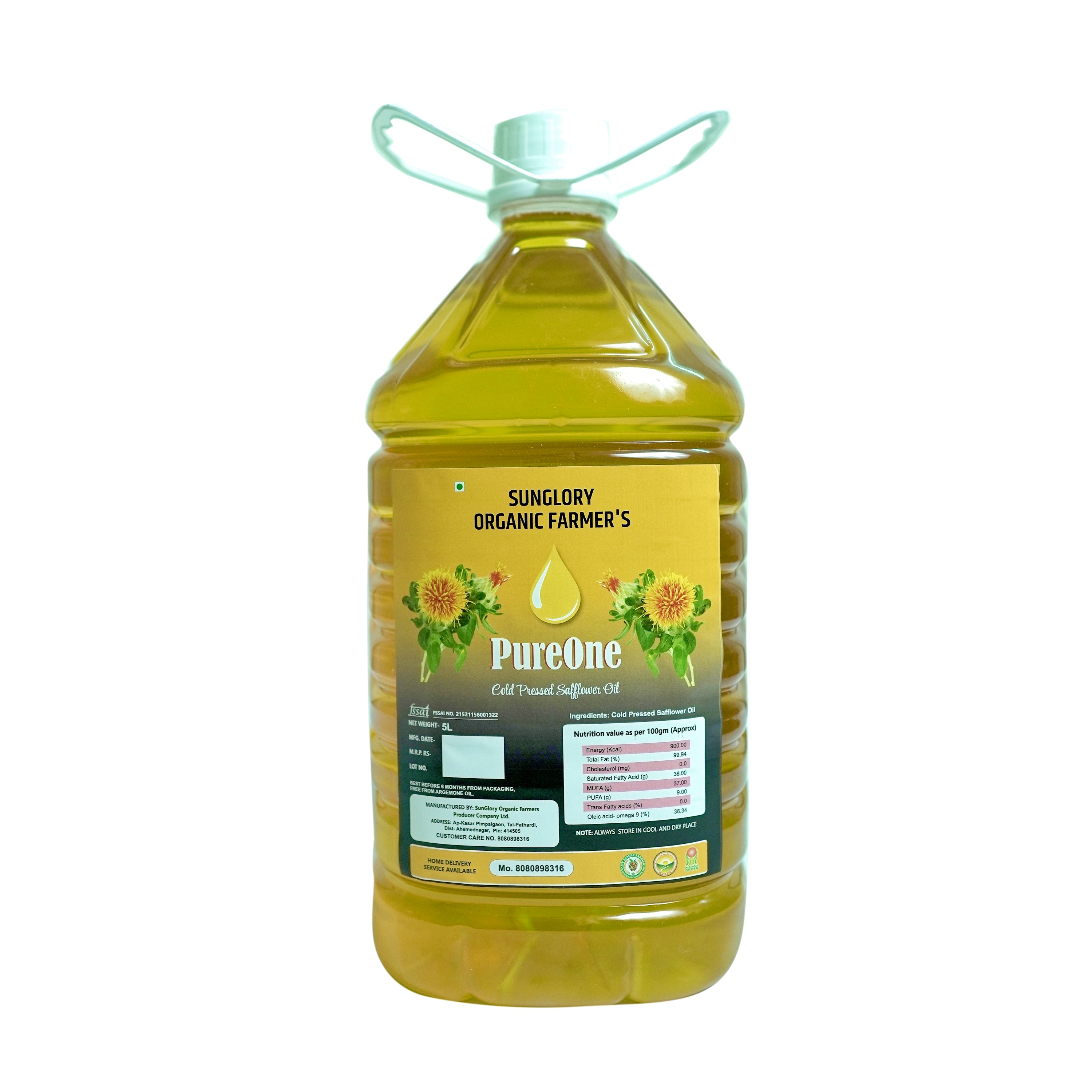
Safflower Oil (Karadi Tel) - Cold Pressed, Wood Ghani
size
Choose options
size
size
Safflower oil pressed on a wooden ghani, sold in tins for kitchens that buy oil by the five litre. Kardi oil, karadi tel in Marathi, was the daily cooking oil across Maharashtra before refined oils turned cheap. It has a light body and a mild taste that stays out of the way of your masala.
Pressed slow, filtered, nothing else
Safflower seed from our farmer group goes into a wooden ghani turning slow, so the paste never gets hot enough to cook. The oil keeps its faint straw colour and a light nutty smell. After pressing it is settled and filtered, and that is all. No solvent stage, no bleaching earth, no deodorising.
Cooking with kardi
Neutral enough for everything, which is why the big tins move fastest. Fodni for varan and usal, bhaji through the week, batata vada and kanda bhaji when people come over, koshimbir dressing, and the oil that goes on the tawa under thalipeeth. It takes frying heat better than sesame, so a Sunday batch of puris is fine.
Tin sizes
5 litre, 10 litre and 15 litre. Households usually take the smallest, mess kitchens take the rest.
Storage
Decant into a smaller bottle for daily use and keep the tin shut in a dark cupboard.
Keep sesame oil beside it for tempering, and coconut oil if southern food is cooked at home. All of it is listed under wood pressed oil.
Frequently asked questions
Which oil is best for deep frying
Among the cold pressed ones, safflower and groundnut take the most heat. Keep the flame moderate, strain after cooling, and reuse no more than twice.
What is the difference between kardi oil and refined safflower oil
Same seed, different handling. Kardi off a ghani is crushed and filtered, refined safflower is solvent extracted and processed until it turns colourless and odourless.
How long will a 15 litre tin last
A family of four cooking daily uses about a litre and a half a month, so the big tin suits large households or catering. Buy what you can finish in six months.


