
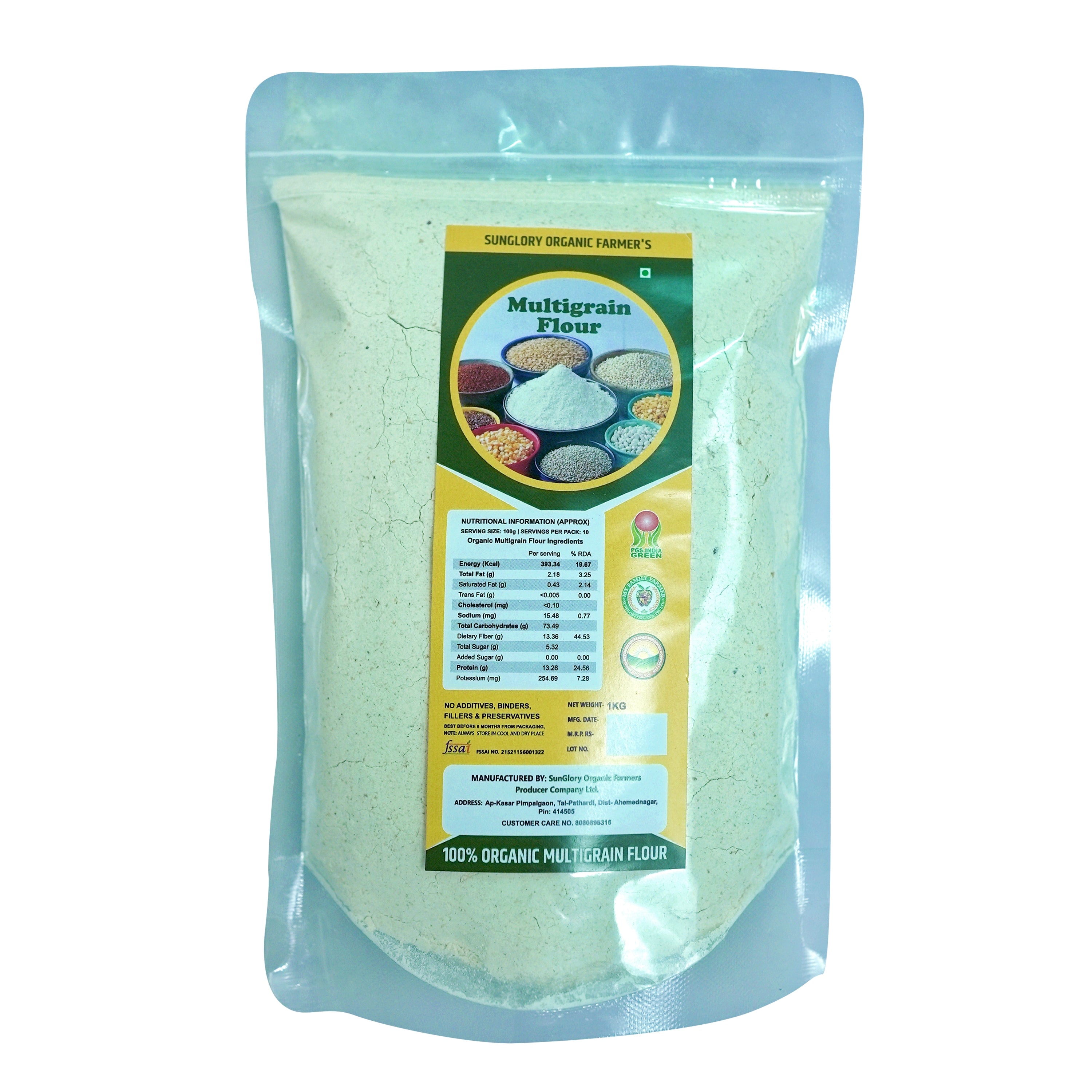
Multigrain Thalipeeth Flour (Bhajani)
Weight
Choose options
Weight
Weight
Bhajani, the roasted multigrain flour that thalipeeth is made from. Jowar, bajra, wheat, rice, chana dal, urad dal and coriander seed are roasted separately, each one to its own colour, cooled, and only then ground together.
Roasting is the whole job
Every grain in the mix wants a different time on the pan. Roast them together in one batch and some come out raw while others scorch, and that is exactly why cheap bhajani and most factory multigrain atta taste flat. Ours is done in small lots and ground soon after, so the pack smells toasty the moment you open it. The grain comes from our own members and nothing outside the mix goes in.
Making thalipeeth with it
- Mix with finely chopped onion, coriander, green chilli, a pinch of haldi and salt.
- Bind with warm water into a soft dough and rest it briefly.
- Pat it straight onto the tawa with wet fingers and make holes so the centre cooks.
- White butter, thecha or plain dahi on the side.
The same flour makes good dhirde, and it coats upvas style kaap nicely before frying.
Packs and shelf life
Available in 1kg, 2kg and 4kg. Roasted flour holds its character longer than plain atta, though it still fades, so keep it airtight and finish within roughly three months.
More milling is listed under grains and flours. Thalipeeth usually gets a spoon of A2 desi ghee on top, and bajra flour is worth keeping for winter bhakri.
Frequently asked questions
What is bhajani flour made of
Roasted jowar, bajra, wheat, rice, chana dal, urad dal and coriander seed, ground into one flour.
Can I make bhakri from bhajani
Thalipeeth is what the flour is built for. A bhakri style round is possible, but the dal in the mix softens it and it will never behave like plain jowar bhakri on the tawa.
Why does my thalipeeth break while patting
Nearly always a dry dough or cold water. Use warm water, keep the dough soft, and wet your palm before you start patting.


