
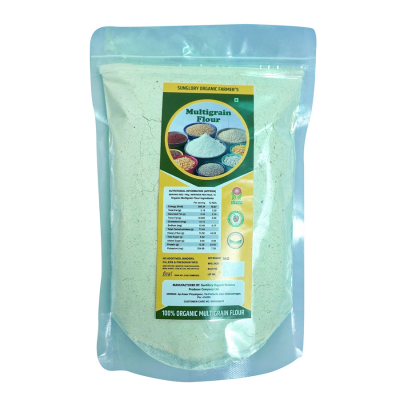
Multi Grain Flour (Bhajani Peeth)
Weight
Choose options
Weight
Weight
Multigrain atta ground the way thalipeeth bhajani has always been made in Maharashtra, with each grain and dal roasted separately before it goes anywhere near the mill. Roasting is what gives thalipeeth its smell, and it is the step most factory blends quietly skip.
What goes in
The mix follows the standard bhajani, jowar, bajra, wheat, rice, chana dal, urad dal and coriander seed. Grains come from our own farmer group, raised on vermicompost with no chemical fertilizer, roasted in small batches and stone ground together. We mill short runs because roasted flour loses its aroma within a few weeks.
Making thalipeeth with it
Add chopped kanda, kothimbir, green chilli, a pinch of haldi and salt, then bring the dough together with warm water. Pat it out on a wet plastic sheet or a banana leaf, make the hole in the middle, and cook slow with oil running around the edge. Curd and loni on the side. The same peeth works for dhirde and for a quick ghavan on a night nobody wants to cook.
Pack sizes
1kg and 2kg.
Storage
Roasted flour holds its aroma for about six weeks in a sealed dabba. Keep it off the masala shelf, it picks up other smells very easily.
Thalipeeth usually shares the plate with jaggery dhep or a spoon of A2 desi ghee, and the oil around the edge is better from a wood pressed bottle than a refined one.
Frequently asked questions
What is bhajani flour made of
Roasted jowar, bajra, wheat, rice, chana dal, urad dal and coriander seed, ground together. Every household has its own proportion, ours follows the common Maharashtrian one.
Is bhajani the same as multigrain atta
Close, but no. Ordinary multigrain atta is a mix of raw flours meant for chapati, while bhajani is roasted first and made for thalipeeth.
Why does my thalipeeth crack while patting
Too little water, or water that was cold. Use warm water, rest the dough ten minutes, and wet your palm before you start patting.


