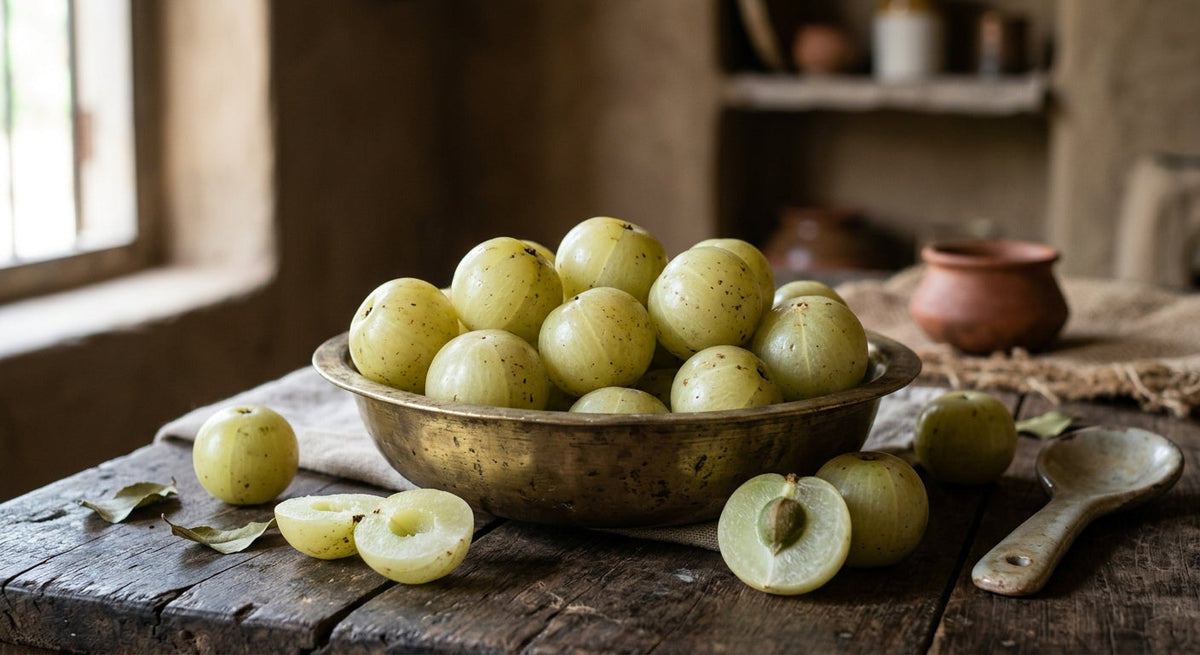
Khapli wheat is an ancient variety of wheat, known to botanists as Triticum dicoccum and to the rest of the world as emmer wheat. In Marathi it is called khapli gehu (खपली गहू). It is one of the oldest cultivated wheats on earth, it has been grown in India for centuries, and it is quite different from the wheat that fills most shops today.
The wheat in an ordinary packet of atta is Triticum aestivum, modern bread wheat, bred over the last hundred years for high yield and soft dough. Khapli was never bred that way. It kept its thick husk, its hard grain and its old character.
If you have ever eaten a roti that tasted nutty and was still soft in the tiffin at lunchtime, it may well have been khapli.
Where khapli wheat comes from
Emmer is genuinely ancient. It was one of the first grains humans farmed, in the Fertile Crescent, and it has been found at Mehrgarh in the Indian subcontinent from the Neolithic period.
In India today it survives mainly in Karnataka, coastal Gujarat, Tamil Nadu, Andhra Pradesh and Maharashtra. In our own state it has been quietly grown for hundreds of years, and it is now coming back. Jalgaon district alone has around 1,500 acres under khapli, and interest is spreading among farmers who want a crop that can handle a harder climate.
That is the other thing about khapli. It is tough. It resists drought and disease better than modern wheat, which is exactly why old farming families never fully let go of it.
Khapli wheat vs normal wheat
| Khapli (Emmer) | Normal Atta (Bread Wheat) | |
|---|---|---|
| Botanical name | Triticum dicoccum | Triticum aestivum |
| Age of the variety | Ancient | Modern, last 100 years |
| Grain | Hard, thick husked | Soft, thin husked |
| Fibre | Higher | Lower |
| Gluten | Lower | Higher |
| Resistant starch | Present | Less |
| Taste | Nutty, fuller | Mild, plain |
| Roti texture | Denser, stays soft longer | Lighter, dries faster |
| Yield for the farmer | Lower | Much higher |
| Price | Higher | Lower |
The short version is this. Khapli gives you more fibre and less gluten, and it costs more because it yields less. Normal atta is cheaper and more versatile. Both have their place in a kitchen.

Khapli atta or millets, which should you choose?
This comes up often, and the honest answer is that they are not competing with each other. Millets like jowar, bajri and nachani contain no gluten at all, so they cannot be rolled into a soft chapati without help, which is why they are made into bhakri instead. Khapli still contains gluten, less than modern wheat but enough to make a rolled roti.
If you want an everyday chapati with more fibre than regular atta, khapli is the practical choice. If you want to move away from wheat entirely, millets are the answer. Many Maharashtrian households simply keep both, khapli for chapati and jowar or bajri for bhakri.
How khapli atta behaves in the kitchen
- It drinks more water. Add water slowly and give the dough a longer rest.
- The dough is less stretchy. Lower gluten means it will not balloon the way fine atta does.
- Rotis come out denser and darker, with a nutty smell while cooking.
- They stay soft for longer. This is the quality most people notice first, and it is why khapli suits a tiffin box.
- For bhakri and thalipeeth it works very well, because those never needed stretchy dough anyway.
If you are switching over, many families start by mixing khapli with their usual atta and increasing the proportion slowly.

How we grow khapli on our farm
We grow khapli on our own land at Kasarpimpalgaon in Ahmednagar district, as part of SunGlory Organic Farmer Producer Company. The farm runs to 40 acres, and khapli sits alongside our jowar, bajri and lokwan wheat. Our family has farmed this land since 1999, and moved to organic methods years before most people in the city began asking for it.
Khapli is a rabi crop. It goes into the ground once the monsoon has passed and the soil still holds moisture, and it comes off the field in late winter, around February and March. That timing suits it, because khapli does not want much water. It is a hardier plant than modern wheat and it copes with a dry spell far better. That is one of the reasons farmers in this part of Maharashtra never fully gave it up, even when higher yielding varieties arrived.
We do not use chemical fertilizers on it. The nutrition comes from vermicompost made at our own plant, using manure from our own cowshed.
Cleaning khapli takes longer than cleaning ordinary wheat. The grain sits inside a thick husk that has to be removed before milling, so it is slower work and the usable weight after cleaning is lower. That is a large part of why khapli costs more than the atta on a supermarket shelf. You are paying for a low yielding traditional crop and the extra work it takes to prepare.
We mill it fresh in small lots rather than grinding months in advance and storing sacks of flour, because flour starts losing its aroma from the day it is ground. When you order khapli atta from us, it has not been sitting in a warehouse.
How to store khapli wheat and atta
Whole khapli grain keeps for a long time in a dry, airtight container. Its thick husk protects it, which is one reason older families stored grain rather than flour.
Khapli atta is different. Like any freshly milled flour it starts losing aroma from the day it is ground, so buy the quantity your family will finish in a month or two and keep it airtight, away from heat.
Frequently asked questions
Is khapli wheat better than normal wheat?
Better is the wrong word. Khapli has more fibre and less gluten, and a fuller, nuttier taste. Normal wheat is cheaper, easier to roll and more versatile in the kitchen. Khapli suits people who want a more traditional grain and do not mind a denser roti or a higher price. Normal atta suits people who want soft phulkas at a low cost.
Who should not eat khapli wheat?
Anyone with coeliac disease or a diagnosed wheat allergy should avoid it completely. Khapli contains less gluten than modern bread wheat, but it is still a wheat and it still contains gluten. Lower gluten is not the same as gluten free. If you have been told by a doctor to avoid wheat, khapli is not an exception.
Why is khapli atta so costly?
Two reasons, and both are about the crop rather than the packaging. First, khapli yields considerably less per acre than modern wheat, so a farmer growing it earns less from the same land. Second, the grain sits inside a thick husk that has to be removed before milling, which is slow work and reduces the usable weight further. You are paying for a low yielding traditional crop and the extra labour it takes to prepare.
Is khapli atta better than millets?
They do different jobs. Millets contain no gluten, so they make bhakri rather than rolled chapati. Khapli contains some gluten, so it rolls into a roti while still giving you more fibre than regular atta. Most Maharashtrian kitchens keep both.
Is khapli wheat the same as emmer wheat?
Yes. Khapli is the Indian name and emmer is the English name. The botanical name is Triticum dicoccum. You may also see it written as khapli gehu, khapli atta or khapli gahu.
What does khapli atta mean?
Atta means flour, so khapli atta simply means flour milled from khapli wheat.
Is khapli wheat gluten free?
No. It contains less gluten than modern bread wheat, but it is still wheat and still contains gluten.
Can I use khapli atta for everyday chapati?
Yes, although the roti is denser than you may be used to. Many families begin by blending it with their regular atta.
What is khapli wheat called in Marathi?
खपली गहू, khapli gehu. In English it is emmer wheat.
Where to buy khapli wheat in Pune
We grow khapli on our own farm at Kasarpimpalgaon, Ahmednagar, as part of SunGlory Organic Farmer Producer Company, and we deliver across Pune the next day.
- Khapli Wheat (Emmer / Khapli Gehu), in 5kg and 10kg bags
- Organic Grains and Flours, including jowar, bajri, besan and thalipeeth bhajani
Minimum order ₹599. Delivery ₹45, free above ₹1,000. We deliver 7 days a week across Bavdhan, Baner, Aundh, Wakad, Kothrud, Warje, Pimple Nilakh, Vishal Nagar, Wadgaon Sheri and nearby areas.